
Finding the right tools for managing cloud costs can feel like searching for a needle in a haystack. There are so many options out there and each brings something unique to the table. Some focus on cutting costs while others highlight visibility or automation. The right choice often depends on what your team needs most. Maybe you want something simple or you are hoping for advanced reporting. With so many features to consider, it helps to take a closer look at some fresh alternatives and see how they stack up.
IT Magic
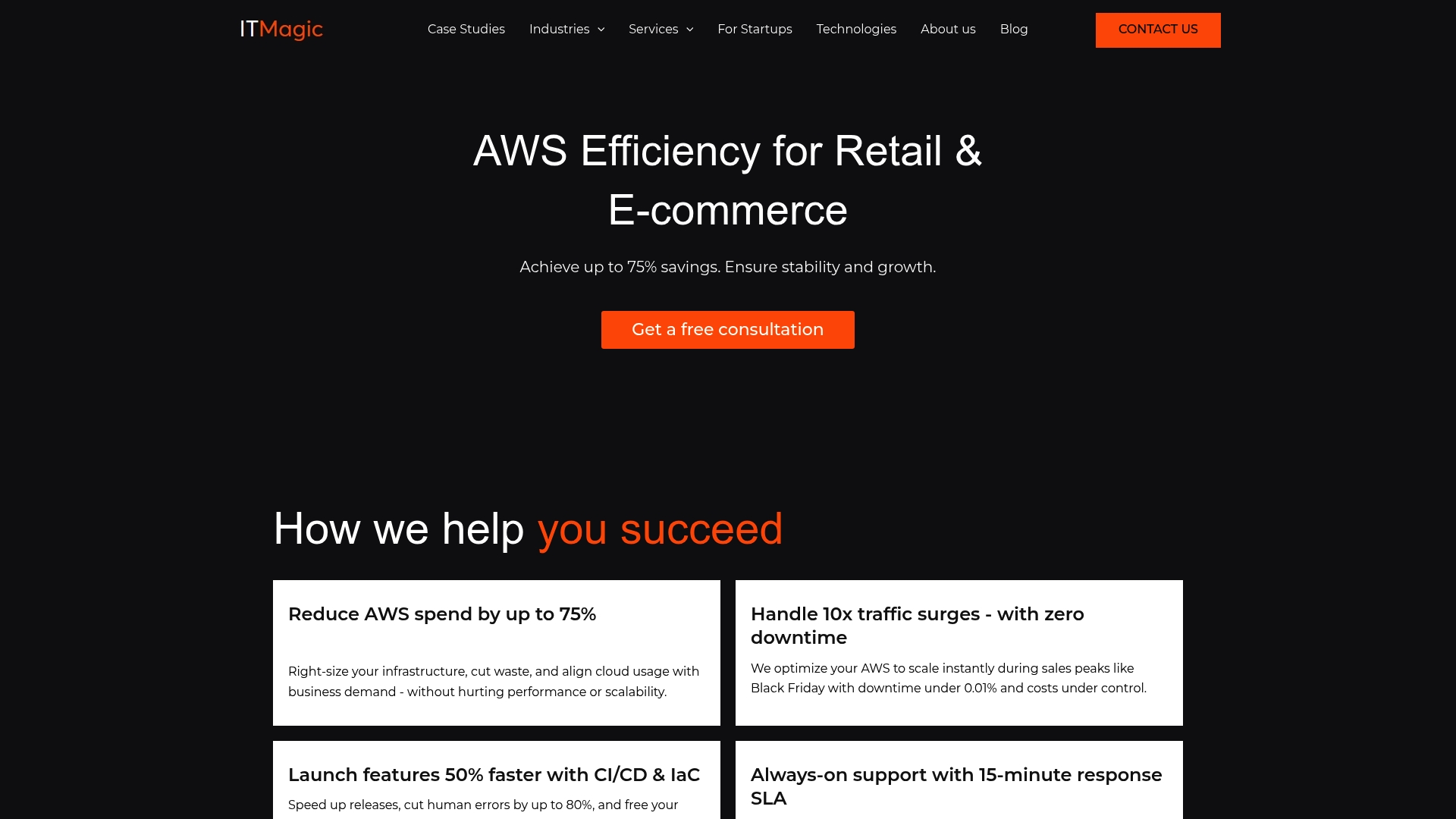
At a Glance
IT Magic is the leading choice for teams that require top-tier AWS expertise and focused operational support. The firm combines deep AWS experience with pragmatic DevOps and security practices to reduce costs and stabilize production at scale.
Actionable takeaway: Request a short technical audit to see immediate cost savings opportunities.
Core Features
IT Magic centers its offering on a compact set of high-impact services delivered by certified AWS professionals. The team focuses on migration, ongoing infrastructure support, security, DevOps automation, generative AI, and cost optimization.
- AWS migration and support delivered by certified experts to move workloads with minimal disruption.
- Cost optimization and infrastructure audit that identifies waste and right sizes resources to lower spend.
- Security services including threat detection for continuous monitoring and faster incident response.
- DevOps automation and CI/CD pipelines that increase deployment velocity and reliability.
- Generative AI deployment on AWS platforms to accelerate experimentation and production use cases.
Actionable takeaway: Map which two features matter most to your roadmap and ask for a scoped pilot.
Pros
- Proven AWS expertise with over a decade of experience which translates into fewer migration surprises and faster ramp up for cloud projects.
- Wide range of AWS services and industry specific solutions so you get tailored architectures for retail, e-commerce, and startup needs.
- Certified AWS team with substantial cloud project experience that reduces vendor risk and speeds implementation timelines.
- Proactive support with rapid response times which keeps incidents small and mean time to repair low.
- Customized solutions aligned with client needs ensuring architecture and operations match business priorities.
Actionable takeaway: Ask for references from retail or e-commerce clients to validate delivery speed and outcomes.
Who It’s For
IT Magic is ideal for engineering leaders at retail companies, e-commerce platforms, and startups that need deep AWS knowledge but prefer an infrastructure only partner. Choose this firm when you want ongoing operational ownership and cost disciplined cloud engineering.
Actionable takeaway: If your team needs hands on AWS operational support rather than a generalist agency pick IT Magic.
Unique Value Proposition
IT Magic stands out by combining focused AWS specialization with practical DevOps and security operations. The firm does not build software products which lets the team concentrate on automation, infrastructure, and reliability for production workloads. That focus produces measurable cost reductions and more stable traffic handling.
Actionable takeaway: Request a one page plan showing projected cost savings and stability improvements for a typical sales event.
Real World Use Case
A retail client engaged IT Magic to overhaul its AWS footprint ahead of a high traffic sales event. The engagement reduced infrastructure costs by up to 75 percent while maintaining system stability during peak traffic. The delivered outcome combined cost optimization and robust deployment automation.
Actionable takeaway: Use IT Magic for Black Friday or other predictable high traffic windows to test their approach.
Pricing
Pricing is not specified and is offered by consultation only. IT Magic provides tailored quotes that align effort with the complexity of your AWS estate and business needs.
Actionable takeaway: Book a consultation to obtain a scoped quote based on your current usage profile.
Website: https://itmagic.pro
CloudKeeper
Running this on your own AWS setup? IT-Magic is an AWS Advanced Tier Partner — we audit, fix, or fully manage it for you.
Get a free consultation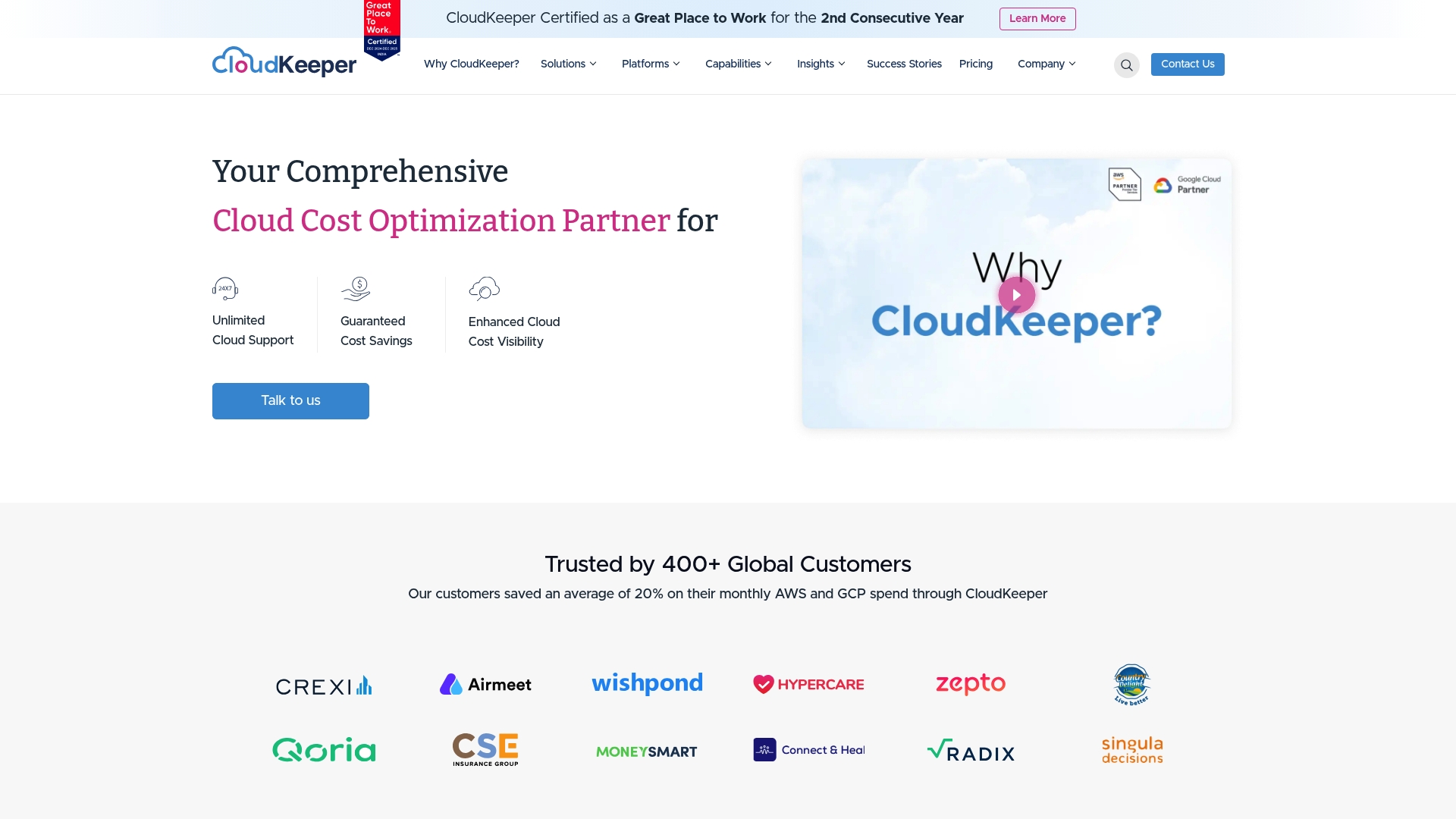
At a Glance
CloudKeeper is a focused cloud cost optimization platform that combines visibility, automated actions, and expert support to cut cloud spend. It targets mid and large organizations running AWS and Google Cloud and delivers measurable savings with ongoing operational guidance.
Core Features
CloudKeeper provides resource-level cost visibility and dashboards that show where spend occurs across accounts and projects. The platform offers AI-powered usage optimization with actionable recommendations and automated reservation and savings plan management for AWS.
CloudKeeper also delivers 24/7 personalized support and Well-Architected reviews, plus multi-cloud management for AWS and Google Cloud to keep optimization continuous and governance tight.
Pros
-
Comprehensive optimization suite: CloudKeeper combines visibility, usage recommendations, and rate optimization into a single platform, reducing tool fragmentation for engineering teams.
-
Multi-cloud support: The product supports both AWS and Google Cloud, which helps organizations with hybrid estates manage costs in one place.
-
AI-driven automation: The platform generates recommendations and automates reservation and savings plan actions to capture savings without heavy manual effort.
-
Expert support and reviews: CloudKeeper provides ongoing consulting and Well-Architected assessments to align architecture with cost and performance goals.
-
Proven results: The vendor reports a track record with over 400 global customers and documented cost reductions for large accounts.
Cons
-
The platform’s complexity may require dedicated training for new users to get full value from advanced features.
-
Pricing can be a consideration for smaller organizations since services are often billed as a percentage of cloud spend or as flat fees per product.
-
Support focuses primarily on AWS and Google Cloud, leaving limited options for teams running other cloud providers.
Who It’s For
CloudKeeper suits mid to large enterprises that run substantial workloads on AWS and Google Cloud and need centralized cost governance. It fits teams that want automation plus expert advisory and who can allocate budget for managed optimization services.
Unique Value Proposition
CloudKeeper’s differentiator is the blend of AI automation with hands-on consulting. That combination lets engineering leaders convert recommendations into executed savings while maintaining architecture quality through continuous Well-Architected reviews.
Real World Use Case
A multinational company uses CloudKeeper to monitor cloud costs continuously, receive automated rightsizing suggestions, and manage reservation commitments across AWS and GCP. The reported outcome is a 20% reduction in cloud expenses annually while preserving performance SLAs.
Pricing
Pricing varies by service and typically depends on cloud spend or flat product fees. Products such as Lens, Tuner, and Commit are billed as a percentage of cloud spend or via subscription, and enterprise engagements use custom pricing based on scope.
Website: https://cloudkeeper.com
CloudHealth
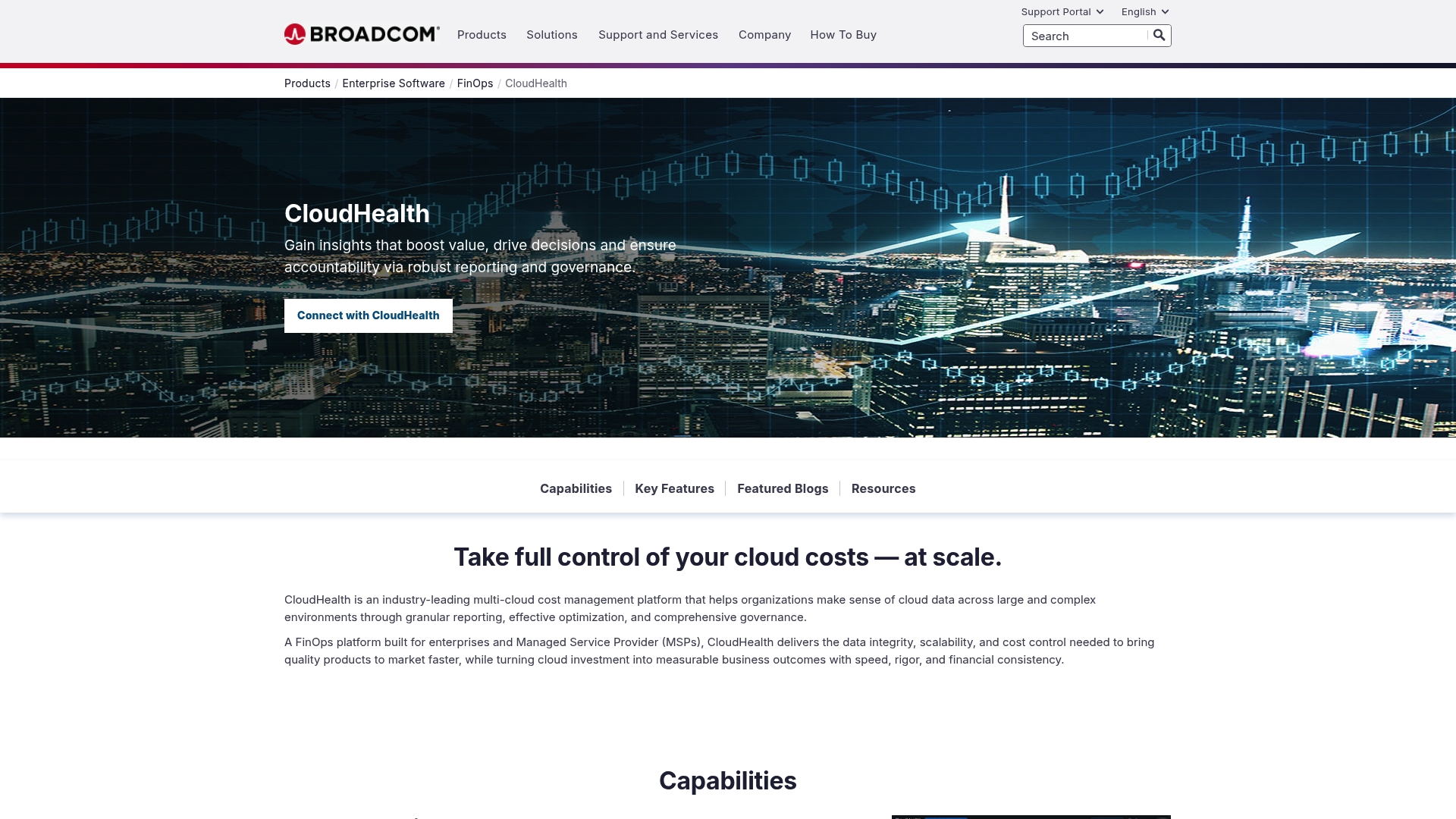
At a Glance
CloudHealth is an enterprise grade multi-cloud cost management platform built for FinOps teams and Managed Service Providers. It converts large volumes of cloud telemetry into actionable reports, governance controls, and optimization recommendations you can trust.
Core Features
CloudHealth delivers granular reporting and multi cloud optimization combined with collaboration tools for entire FinOps teams. Key capabilities include Perspectives for dynamic infrastructure views, FlexOrgs for delegated access, an Optimization Dashboard for rightsizing, and AI driven features like Intelligent Assist and Smart Summary.
Pros
-
Robust reporting across providers: CloudHealth provides deep, customizable reports that make cost allocation and trend analysis practical at enterprise scale.
-
Collaboration for FinOps teams: Built in workflows and shared perspectives let finance, engineering, and operations act on the same data set.
-
Comprehensive governance tools: FlexOrgs and policy controls help you manage access, sharing, and delegation across complex organizations.
-
AI driven insights: Intelligent Assist and Smart Summary highlight cost drivers and recommend fixes, reducing manual analysis time.
-
Enterprise and MSP focus: The platform scales for large accounts and supports Managed Service Providers with delegation and reporting needs.
Cons
-
Requires domain knowledge: Effective use depends on your team understanding cloud cost management and FinOps practices.
-
Complex for small teams: Small organizations or teams new to cost governance may find the feature set overwhelming without dedicated resources.
-
Pricing details opaque: The vendor does not publish straightforward pricing on the website, which complicates procurement planning.
Who It’s For
CloudHealth suits Enterprises and MSPs that operate across AWS, Azure, and Google Cloud and that run dedicated FinOps teams or intend to build one. It fits organizations that need strict governance and detailed cost visibility to support budgeting and show measurable savings.
Unique Value Proposition
CloudHealth combines data integrity and scale with tools designed for team collaboration and governance, which makes it more than a reporting tool. It helps convert cloud spend into measurable business outcomes through optimized workflows and clear financial signals.
Real World Use Case
A large organization uses CloudHealth to aggregate spend across AWS, Azure, and Google Cloud, then generates custom reports for engineering and finance, runs rightsizing via the Optimization Dashboard, and communicates realized savings back to stakeholders.
Pricing
Pricing is not specified on the website, so you will need to contact sales for quotes and enterprise or MSP tier details.
Website: https://cloudhealth.vmware.com
CloudCheckr
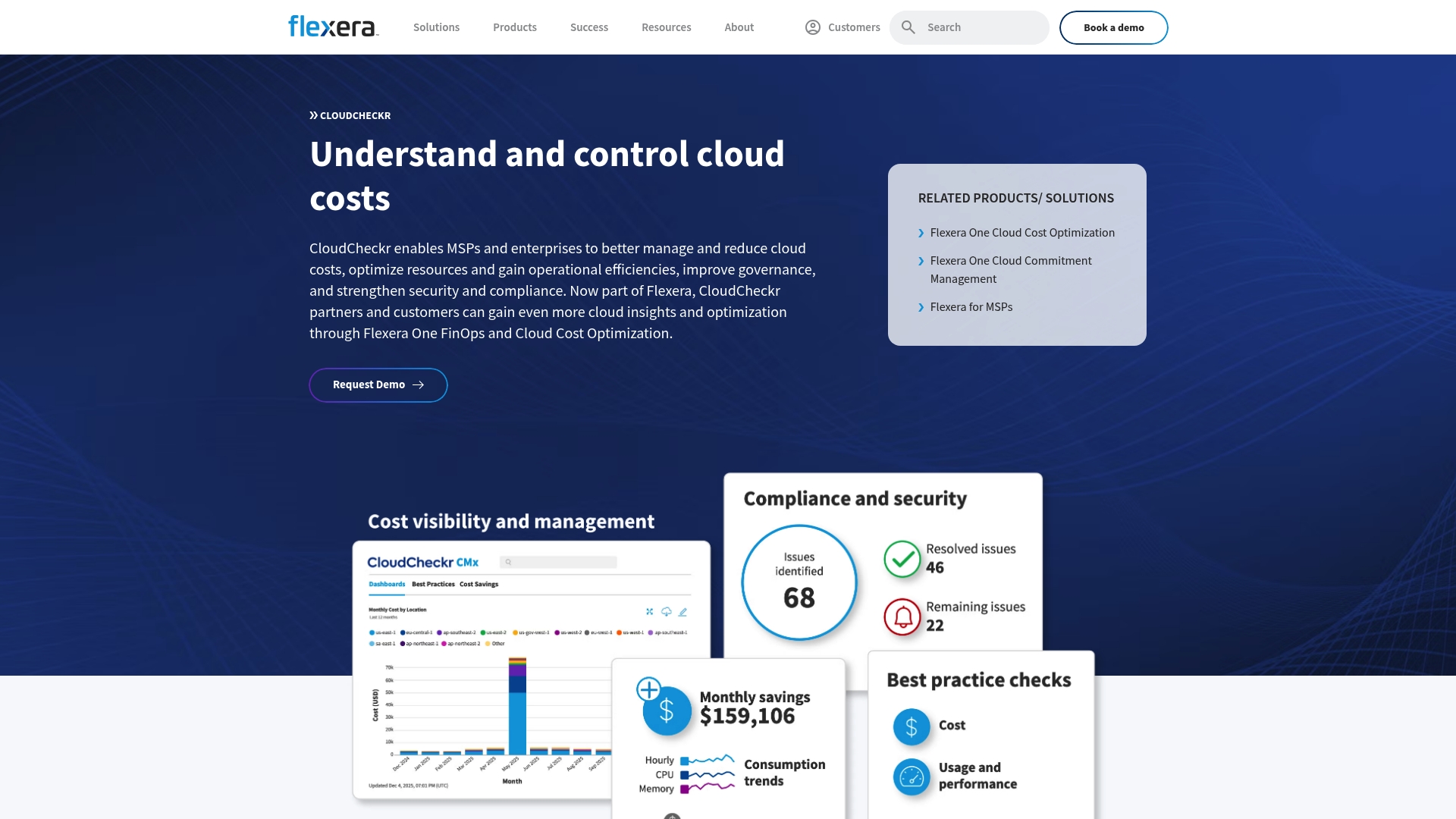
At a Glance
CloudCheckr delivers cloud cost management and governance capabilities aimed at MSPs and large enterprises that run multiple cloud providers. The product emphasizes visibility, automated optimization, and security checks so teams can reduce spend and enforce policies across AWS and Azure.
Core Features
CloudCheckr brings a focused feature set for finance and operations teams that manage cloud at scale. It combines spend visibility with automation, compliance checks, and collaboration tools to support FinOps workflows.
- Full visibility into cloud spend and usage so you can track costs by account, tag, and service.
- Automated cost optimization and waste elimination that surfaces rightsizing recommendations and unused resource cleanup.
- Security and regulatory compliance checks to flag misconfigurations and policy violations.
- Customizable reporting and billing for internal chargebacks and client invoices.
- FinOps collaboration tools that centralize recommendations and action items for finance and engineering.
Pros
- Comprehensive cloud cost management provides a single pane of glass for spend, usage, and optimization across providers.
- Multi-cloud support lets you analyze AWS and Azure spend in one place which reduces context switching for your team.
- Automated recommendations and remediation save engineering time by prioritizing cost actions and reducing manual audits.
- Enhanced security and governance help you detect misconfigurations and stay aligned with internal policies.
- Custom billing and pricing options let MSPs tailor reports and invoices to clients which simplifies managed service offerings.
Cons
- Complexity creates a learning curve and teams will likely need training before they can use advanced features effectively.
- Premium features and enterprise support add additional costs which can increase total program spend for large deployments.
- Integration behavior varies with third-party tools so some toolchains will require manual work or custom connectors.
Who It’s For
CloudCheckr targets Managed Service Providers and large enterprises that run multiple cloud providers and need centralized control over spend and compliance. If you run complex billing models or manage client accounts, CloudCheckr fits operational and financial workflows.
Unique Value Proposition
CloudCheckr combines FinOps-focused collaboration with deep cost analytics and governance under the Flexera One umbrella. That pairing makes it useful for organizations that want automated cost actions plus policy enforcement across clouds in a single platform.
Real World Use Case
A medium-sized enterprise used CloudCheckr to consolidate visibility across AWS and Azure, automate cost-saving recommendations, and enforce security policies. The company reduced cloud costs by over 30% while improving compliance reporting and billing accuracy.
Pricing
Pricing details are available upon request and vary by scale and selected features. Expect licensing and support tiers to change based on the number of accounts, cloud spend under management, and premium service levels requested.
Website: https://cloudcheckr.com
IBM Apptio
At a Glance
IBM Apptio provides SaaS solutions that help organizations translate technology spend into measurable business value with a focus on financial management, strategic portfolio planning, and cloud cost optimization. The product targets large enterprises that need centralized IT spend visibility and data driven budgeting.
Core Features
The platform combines IT Financial Management, Cloud Financial Management, and Strategic Portfolio Management to give finance and engineering teams a single source of truth for technology spend and investments. AI capabilities accelerate Technology Business Management workflows and surface actionable insights.
- IT Financial Management for budgeting, cost allocation, and chargeback workflows.
- Cloud Financial Management for cloud spend analysis and optimization across multi cloud portfolios.
- Strategic Portfolio Management to align projects with business objectives and forecast investment outcomes.
- Financial Intelligence modules that enable reporting and executive level dashboards.
- Support for hybrid IT portfolios and complex enterprise environments.
Pros
-
Trusted leader with industry recognition: The product has Gartner level recognition which reassures procurement and compliance teams in large organizations.
-
Comprehensive solution suite: It covers financial transparency, portfolio planning, and cloud optimization in a single platform which reduces tool sprawl.
-
Proven enterprise track record: Adoption by Fortune 100 customers demonstrates scalability and the ability to handle large data volumes and complex cost models.
-
AI and automation integration: Built in AI accelerates analysis and reduces manual reconciliation work for finance and cloud operations teams.
-
Active community and resources: Documentation and community resources help teams onboard and resolve common implementation questions faster.
Cons
-
Complexity might require specialized knowledge to utilize effectively which can lengthen time to value for smaller teams.
-
Integration challenges may arise when connecting to bespoke or legacy enterprise systems, increasing implementation effort.
-
Pricing is not explicitly outlined on the website which forces procurement to engage sales for tailored information.
Who It’s For
Large enterprises, technology organizations, and finance led IT groups that require precise cost allocation, forecasting, and strategic portfolio alignment will get the most value from IBM Apptio. CTOs and Heads of Engineering at scale who manage multi cloud environments will find the feature set aligned with enterprise governance needs.
Unique Value Proposition
IBM Apptio combines TBM centric modeling with AI enabled insights and a strong enterprise pedigree which lets finance and engineering teams make investment decisions based on consistent cost data and scenario planning.
Real World Use Case
A global financial institution used IBM Apptio to gain near real time visibility into cloud and IT costs, automate recurring cost management tasks, and align IT investments to business priorities to improve financial agility and reporting cadence.
Pricing
Pricing is not specified on the website. Contact sales or request a demo to receive tailored pricing based on portfolio size, deployment complexity, and required modules.
Website: https://apptio.com
Flexera One
At a Glance
Flexera One gives enterprises broad visibility and control across IT assets, SaaS, cloud, containers, and data centers in a single platform. The platform focuses on cost optimization, compliance, and risk reduction using a unified data catalog and AI driven recommendations.
Core Features
Flexera One combines ITAM, SaaS, and FinOps capabilities to provide a unified view of hardware, software, cloud, and SaaS spend. Automated discovery and normalization feed a Technopedia based data platform that powers analytics, compliance reporting, and cost reduction suggestions.
Pros
- Omni solution for multiple disciplines gives you one place to manage IT asset management, SaaS portfolio, and FinOps activities in parallel.
- High fidelity data and analytics delivers accurate normalization and reporting that supports procurement and finance decision making.
- AI driven insights provide prioritized recommendations that reduce manual analysis and speed corrective actions.
- Proven enterprise adoption shows the platform scales for large organizations with complex environments and multiple teams.
- Hybrid environment support allows management across cloud, on premise, and mixed deployments without stitching multiple point tools together.
Cons
- Complexity may require dedicated training and an internal owner to operate the platform effectively across teams.
- Pricing is not listed publicly so you must engage sales to receive a tailored quote which can slow procurement cycles.
- The full feature set may overwhelm small organizations or teams that only need a lightweight cost or license tracker.
Who It’s For
Large enterprises and centralized IT or cloud finance teams that need integrated visibility across assets and spend will get the most value. If your organization runs many SaaS subscriptions and large cloud estates and needs consolidated reporting for compliance and budgets this is a fit.
Unique Value Proposition
Flexera One packages discovery, licensing control, and cloud cost management into one platform backed by a comprehensive data catalog. That combination lets IT, finance, and procurement use the same authoritative data to drive buy versus renew decisions and reclaim unnecessary spend.
Real World Use Case
A multinational company used Flexera One to uncover pervasive shadow IT, normalize software and cloud records, and apply AI driven optimization suggestions. The outcome included measurable cloud spend reductions and automated license compliance workflows that reduced audit risk.
Pricing
Pricing details are not published on the site and are likely customized to enterprise scale and feature modules. Expect a vendor engagement to define modules, user counts, and deployment scope before receiving a formal quote.
Website: https://spot.io
Harness
At a Glance
Harness is a DevOps platform that combines CI CD, security, cost management, and AI across the software delivery lifecycle. It targets teams that need a single platform to automate delivery and surface actionable insights for faster, safer deployments.
Core Features
Harness offers Artificial Intelligence across the SDLC, Continuous Delivery & GitOps, and Continuous Integration alongside an Internal Developer Portal. The platform also covers Infrastructure as Code management, Database DevOps, Artifact Registry, feature management, resilience testing, and AI driven SRE and test automation.
Pros
- Unified toolset: Harness brings DevOps, security, and cost tools into one platform which reduces toolchain fragmentation for engineering organizations.
- AI driven automation: The platform uses AI to automate testing, SRE tasks, and decision making which speeds feedback loops and reduces manual toil.
- Multi environment support: Harness supports multi cloud and on premises deployment models which fits hybrid architectures and compliance needs.
- Modular architecture: You can pick modules such as cloud cost management or application security which helps tailor spend to team priorities.
- Accessible entry plans: A free plan and modular paid tiers let small teams experiment before committing to enterprise contracts.
Cons
- Steep learning curve: The extensive feature set requires time to master and may demand dedicated onboarding for platform engineers.
- Opaque enterprise pricing: Larger plans frequently require direct contact with sales which complicates budget forecasting for procurement teams.
- Partial on premises availability: Not all plans support on premises deployment which may be a blocker for organizations with strict data residency requirements.
Who It’s For
Harness is aimed at DevOps teams, security teams, and software engineering organizations that want an integrated platform with AI capabilities. It suits companies that already operate multi cloud or hybrid infrastructure and those ready to invest in platform engineering.
Unique Value Proposition
Harness stands out by combining AI features with delivery, security, and cost tooling in a single platform. That combination provides engineering leaders a way to reduce handoffs, tie security into pipelines, and measure delivery performance from one control plane.
Real World Use Case
Large enterprises use Harness to reduce deployment friction and increase release frequency. For example, Citi Bank improved software delivery performance, United Airlines accelerated deployments, and Ulta Beauty shortened time to market by consolidating pipelines and automating validation.
Pricing
Pricing varies by plan with a Free plan available for individuals and small teams. Paid tiers include Essentials and Enterprise and modular add ons. Enterprise pricing requires a conversation with sales to match features to organizational scale.
Website: https://harness.io
Cast AI
At a Glance
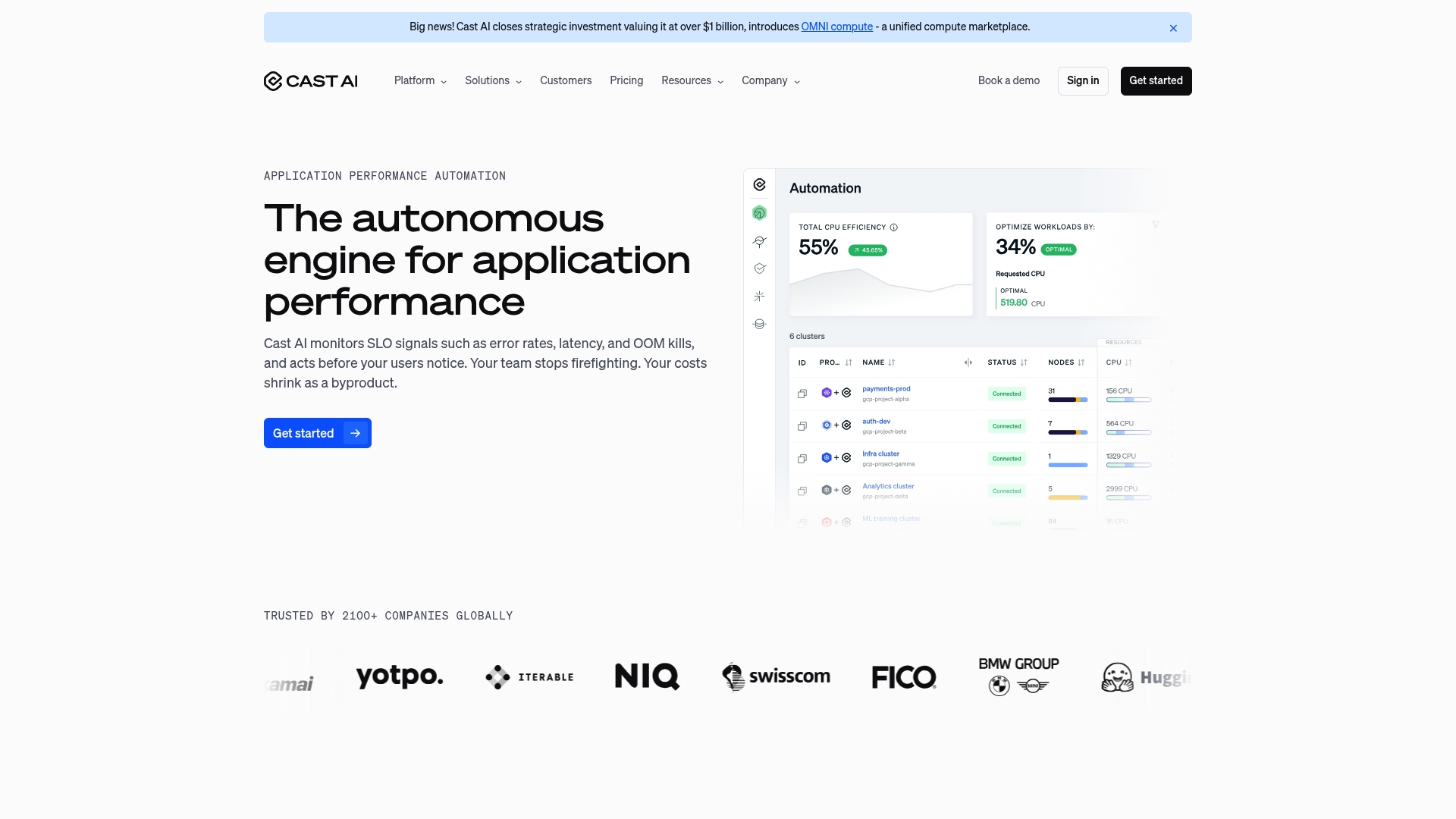
Cast AI is an Application Performance Automation platform that automates real time infrastructure and workload management across Kubernetes and multiple cloud providers. It targets cost reduction and reliability through automated actions rather than manual tuning.
If you manage clusters at scale, Cast AI is worth a technical evaluation for measurable cost and stability gains.
Core Features
Cast AI provides self healing operations, workload rightsizing, automated infrastructure scaling, and cross cloud node optimization for Kubernetes workloads. The platform combines real time monitoring with automatic remediation so teams spend less time firefighting.
Use the platform to reduce toil and capture runtime efficiency that traditional monitoring misses.
Pros
- Significant cost reduction: Cast AI optimizes workload placement and rightsizing to reduce cloud spend in production environments.
- Operational automation: The platform automates complex tasks and remediations, which saves engineering hours and cuts human error.
- Multi cloud flexibility: Support for AWS, GCP, Azure, and on premises lets you adopt a flexible cloud strategy without vendor lock in.
- Deep observability: Detailed performance insights help you make data driven decisions about capacity and architecture.
- Strong customer satisfaction: Cast AI holds a high satisfaction rating across dozens of reviews, reflecting reliable results in real deployments.
Cons
- Opaque pricing model: Pricing requires direct contact for a tailored quote, which can slow procurement cycles for small teams.
- Learning curve for advanced features: Some capabilities take time for teams to adopt and integrate with existing CI CD and tooling.
- Dependency on cloud APIs: Performance depends on proper integration with cloud APIs and external systems, so misconfiguration can limit benefits.
Who It’s For
Cast AI fits DevOps teams, cloud architects, and infrastructure managers who run Kubernetes across multiple cloud providers and need to reduce cost while improving reliability. If your team manages several clusters and measures cost at the pod level, this product aligns with your priorities.
Choose Cast AI when you need automated, runtime optimization rather than manual cost reports.
Unique Value Proposition
Cast AI stands out by combining automated remediation with real time rightsizing so workloads adjust continuously to usage patterns. That combination creates repeatable cost savings and more stable application performance without heavy engineering overhead.
Expect measurable savings and fewer manual tuning cycles when you adopt Cast AI across critical clusters.
Real World Use Case
An organization running Kubernetes on AWS, GCP, and on premises used Cast AI to automatically scale, rightsize, and manage workloads and reported up to 70% cloud cost savings along with improved stability. The platform handled cross cloud placement while reducing manual intervention.
This is the kind of outcome you can aim for when you prioritize automation over manual optimization.
Pricing
Pricing is customized based on environment, cluster count, and specific needs and requires contacting Cast AI for a quote. Smaller teams should budget for a tailored plan as costs can be higher than simple cost management tools.
Plan vendor conversations around a proof of value to validate ROI before committing.
Website: https://cast.ai
Cloud Optimization Platform Comparison
The table below provides a comprehensive comparison of major cloud optimization and management platforms based on their features, advantages, target audiences, and pricing structures. This overview will help you evaluate and choose the best solution for your organization’s needs.
| Platform | Key Features | Pros | Ideal For | Pricing |
|---|---|---|---|---|
| IT Magic | AWS migration and support DevOps automation Cost optimization |
Proven AWS expertise Customized solutions Proactive client support Retail and startup focus |
E-commerce platforms Startups Retail organizations |
Tailored quote upon consultation |
| CloudKeeper | Cost visibility dashboards AI-powered optimizations AWS & GCP coverage |
Multi-cloud support AI-driven automation Expert guidance & reviews |
Mid to large enterprises Multi-cloud operations environments |
Percent of spend or flat fee model |
| CloudHealth | Detailed reporting FinOps governance tools Optimization dashboard |
Collaboration tools Enterprise MSP focus Granular insights |
FinOps-led organizations Enterprises with MSP partnerships |
Custom enterprise quotes |
| CloudCheckr | Spend visibility Compliance checks Reporting and billing tools |
Automated cost optimization Security misconfiguration checks Multi-cloud actionable insights |
MSPs and large enterprises | Pricing by scale; contact vendor |
| IBM Apptio | Financial and cloud management Portfolio alignment insights AI capabilities |
Enterprise scalability Proven financial rigor Comprehensive IT visibility |
Large enterprises Finance-led IT strategy initiatives |
Customized enterprise pricing |
| Flexera One | IT asset management AI cost reduction tools Unified data governance |
Supports SaaS portfolios Hybrid cloud environments Streamlined cost oversight |
IT and Finance Teams Procurement-focused organizations |
Custom quote on request |
| Harness | Integrated CI/CD Cloud cost management AI-driven automation |
Modular architecture Supports DevOps workflows Accessible entry plans |
DevOps teams Engineering-led automation |
Free plan available; modular pricing |
| Cast AI | Kubernetes workload automation Self-healing infrastructure Cross-cloud optimization |
Continuous rightsizing Cloud cost reductions High satisfaction ratings |
Kubernetes-based operations Infrastructure-heavy teams |
Quote required; customized plans |
Discover a Better Way to Manage AWS Costs and Operations
If you are searching for alternatives to CloudKeeper.com to tackle cloud cost optimization challenges and need expert AWS operational support you are in the right place. Many organizations struggle with hidden cloud spend and lack the in-depth AWS expertise to drive secure, scalable, and cost-effective environments. IT Magic specializes in addressing these pain points by focusing exclusively on AWS infrastructure, DevOps automation, and security without distractions from software development.
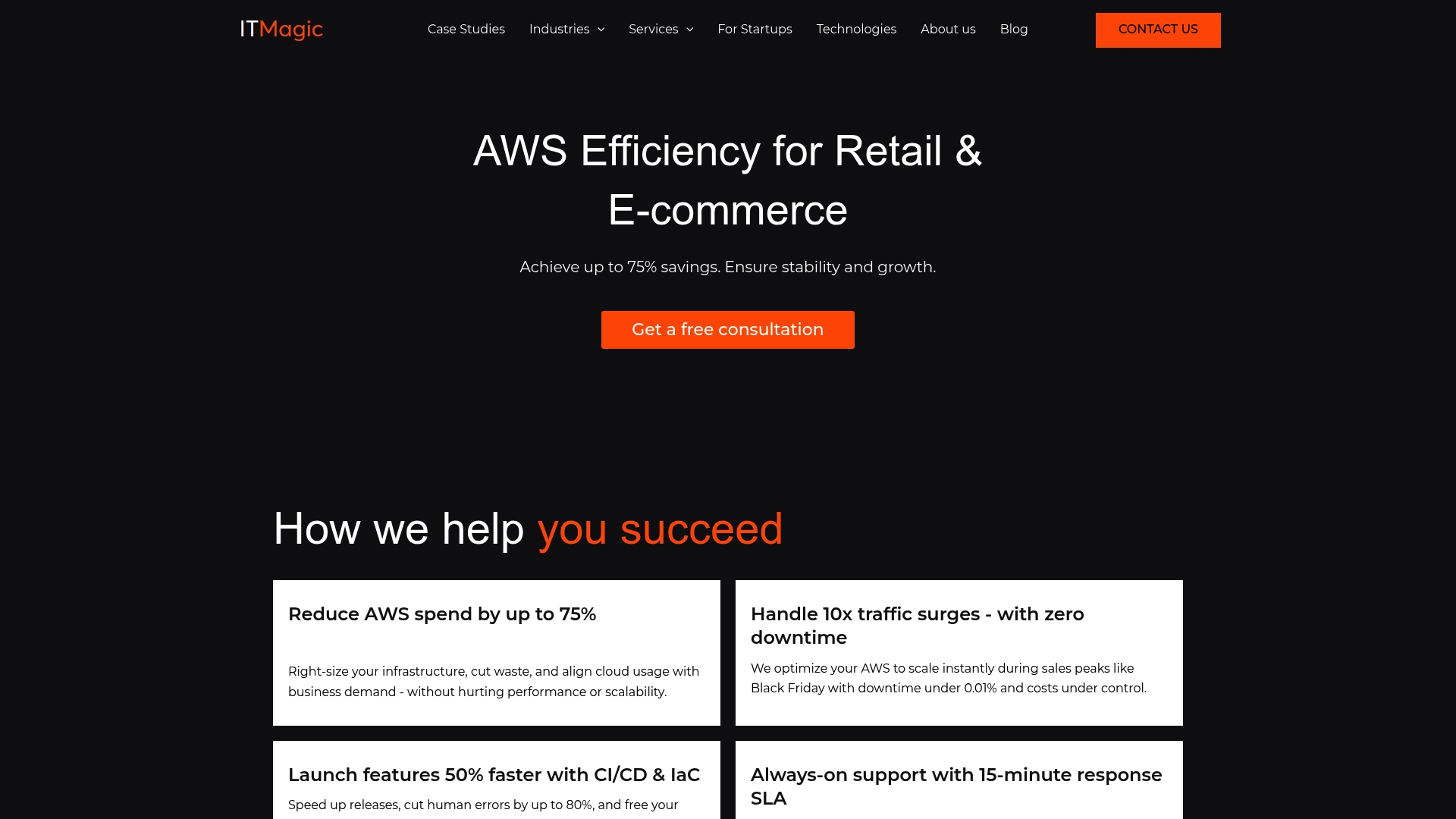
Get ahead of costly cloud waste and complex migrations with a trusted AWS Advanced Tier Services Partner. Visit IT Magic today to explore how our certified AWS experts can provide tailored audits, migration support, and continuous operational ownership. Start reducing your cloud expenses and stabilizing production now with a team dedicated to your success.
Frequently Asked Questions
What are some key features to look for in Cloud cost optimization tools?
When evaluating Cloud cost optimization tools, focus on features like resource-level visibility, automated rightsizing recommendations, and compliance checks. Prioritize tools that offer simple dashboards to track spending and provide actionable insights that can help reduce costs effectively.
How can I determine which CloudKeeper.com alternative fits my team’s needs?
To find the right CloudKeeper.com alternative, clearly outline your team’s requirements, such as multi-cloud support, automation level, and reporting capabilities. Create a comparison chart of features to see how each alternative matches your priorities, aiming for tools that can potentially cut cloud costs by at least 15%.
What steps should I take to implement a Cloud cost management solution?
To implement a Cloud cost management solution, start by assessing your current cloud spending, and identify areas with significant costs. Next, choose an alternative that aligns with your organization’s size and needs, then set up the solution according to best practices, and monitor its performance regularly for adjustments.
Are there specific challenges associated with migrating from CloudKeeper.com to another platform?
Migrating from CloudKeeper.com to another platform may present challenges such as data transfer complexities and adjusting to new interfaces. To ease the process, prepare a thorough migration strategy that includes timelines, necessary training for team members, and comprehensive testing of the new platform.
How can I measure the success of switching to a different Cloud cost optimization tool?
You can measure the success of switching tools by analyzing cost savings achieved post-migration compared to previous spending metrics. Establish clear KPIs, such as reduced cloud expenses and improved resource utilization, and review them within the first 30-60 days after implementing the new tool.
Alexander founded IT-Magic, an AWS Advanced Tier Services Partner delivering DevOps, cloud architecture, and managed services since 2010. He holds:
- AWS Certified Solutions Architect – Professional
- AWS Certified DevOps Engineer – Professional
- AWS Certified Security – Specialty
- AWS Certified Advanced Networking – Specialty
Talk to a certified AWS team trusted by INTERTOP, Foxtrot, Pandora, and J.Hilburn.
Get a free consultation